The Core of Lakeland HVAC Spring Maintenance
How do I perform proper Lakeland HVAC spring maintenance?
To prepare your HVAC system for the extreme heat of a Central Florida summer, you must start in the spring. Key maintenance tasks include replacing your indoor air filter every 90 days, pouring a half-cup of white vinegar down the condensate drain line to prevent algae clogs, and clearing landscaping at least two feet away from the outdoor condenser unit. These simple steps maximize airflow, reduce energy bills, and prevent untimely system failure in July.
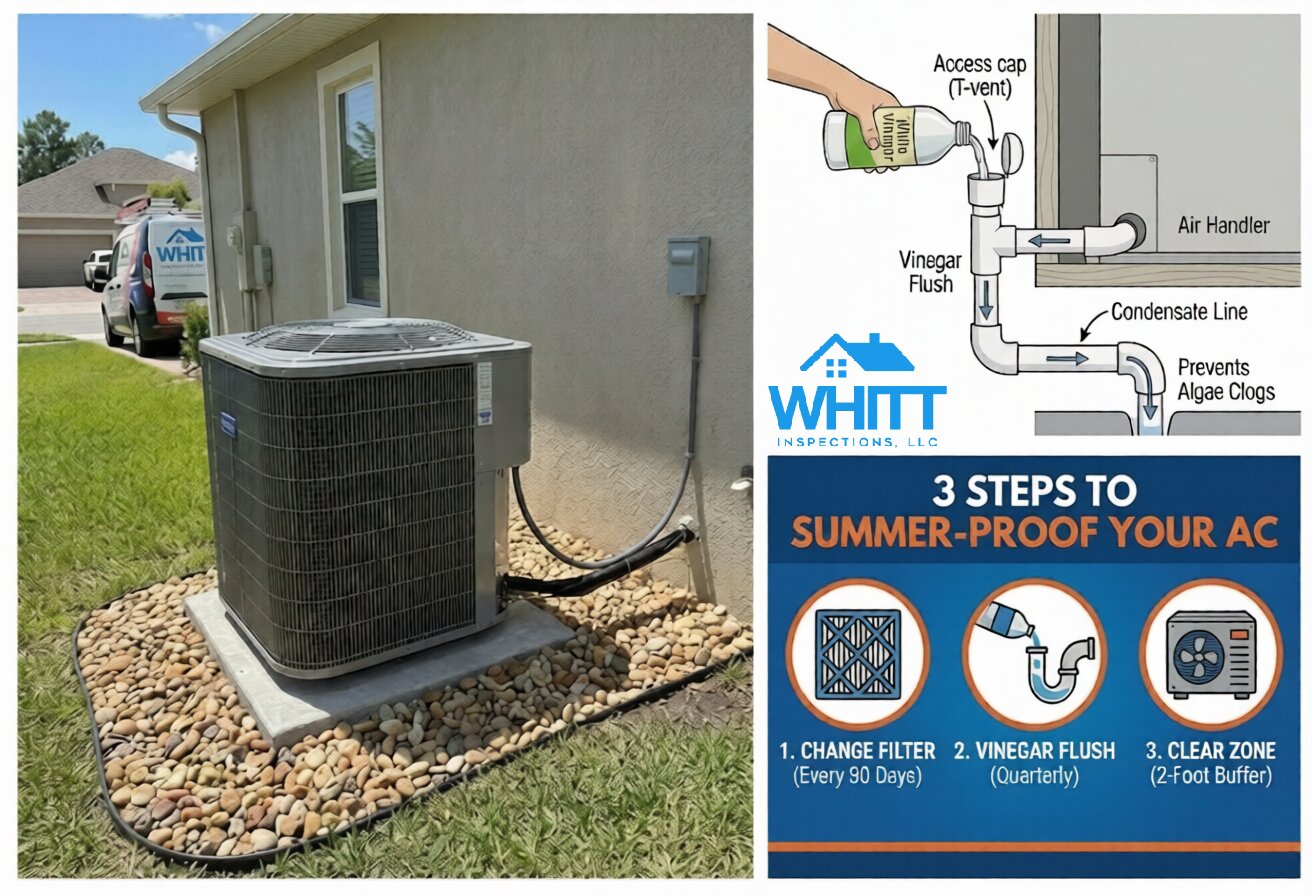
Proper spring HVAC maintenance, like clearing your condensate drain line and changing your filter, can save Lakeland homeowners from costly summer breakdowns.
The Veteran’s Perspective: Beat the Florida Heat
In our over 20 years of experience in housing, the most common—and most expensive—failures we see happen in the dead of summer. A neglected AC unit will work twice as hard to cool your home. This drives up your electric bill before eventually burning out the compressor.
We believe in being proactive. A little sweat equity in February or March saves you from sweltering in August while waiting three days for an emergency repair tech. Your HVAC system is the most expensive appliance in your home. Let’s treat it like one.
The “White Vinegar Trick” for Drain Lines
Our Lakeland humidity means your AC unit pulls gallons of water out of your indoor air every single day. That water exits through a small PVC pipe called the condensate drain line.
If algae builds up and clogs that line, the water backs up. This triggers a safety float switch that completely shuts down your AC. In a worst-case scenario, the switch fails, and water floods your ceiling or utility closet.
Pouring just a half-cup of plain white vinegar down the access port of your drain line every quarter kills the algae and keeps the water flowing. Do not use bleach, as it can degrade the PVC glue over time. Vinegar is safe, cheap, and incredibly effective.
Give Your Outdoor Condenser Room to Breathe
Your outside unit (the condenser) needs to pull in massive amounts of air to release the heat from your home. If you have overgrown bushes, weeds, or lawn debris hugging the unit, you are suffocating it.
Take a pair of clippers and ensure there is a strict 24-inch “clear zone” all the way around the metal casing. This allows the internal fan to pull air efficiently across the condenser coils.
Additionally, look at the metal fins on the outside of the unit. If they are caked in lawn clippings or dirt, use a garden hose on a gentle shower setting to rinse them off. Never use a pressure washer, as it will instantly bend the delicate aluminum fins and ruin the unit.
Why the Right Air Filter Matters More Than You Think
Many homeowners buy the most expensive, highly rated “allergen” filter they can find at the hardware store. For most standard residential systems, this is a massive mistake.
Thick, heavy filters restrict airflow. If your system is not specifically designed to push air through a dense HEPA-style filter, the blower motor will strain itself to death trying to circulate air.
Stick to a standard, pleated MERV 8-11 filter. It catches dust and pet dander perfectly without suffocating your system. The real secret isn’t the thickness of the filter; it is the frequency of the change. In Florida, you should change that standard filter at least every 90 days during the cooling season.
Inspecting Your Indoor Vents and Registers
Walk through your home and look at your supply vents (where the cold air comes out) and return vents (where the air gets sucked in).
Make sure heavy furniture, rugs, or curtains are not blocking these grates. Blocking a vent doesn’t “save money” by pushing air to other rooms; it actually creates back-pressure in your ductwork, which causes duct leaks and forces your system to work harder. Keep all vents fully open and unobstructed.
FAQ: Lakeland AC Maintenance
-
How often should I change my air filter?
-
In Florida, change it every 90 days during the summer. If you have pets or allergies, do it every 30 days instead. Standard 1-inch pleated filters work best—avoid the heavily restrictive “HEPA” style filters unless your system is specifically designed for them, as they can restrict necessary airflow. Writing the installation date on the paper around the filter when changing it is what we do.
-
-
How often should I schedule professional maintenance?
-
You should have a qualified HVAC contractor service your system once a year, ideally in the spring. They will check your refrigerant levels, clean the evaporator coils, and test your electrical capacitors before the heavy summer load hits.
-
-
When should I call a professional immediately?
- If your unit is running constantly but the air coming out of the vents isn’t cold, shut it down. If you hear loud grinding or squealing noises from the outdoor fan, turn it off at the thermostat immediately. Running a compromised system will turn a $150 capacitor repair into a $3,000 compressor replacement.
Taking care of your home’s systems season by season is the best way to protect your investment. Your HVAC unit is just one of the critical components we evaluate to ensure a house is safe and efficient. Explore the rest of our Homeowner Resources for more seasonal maintenance tips, or learn exactly what to expect during a comprehensive, veteran-backed Home Inspection.